

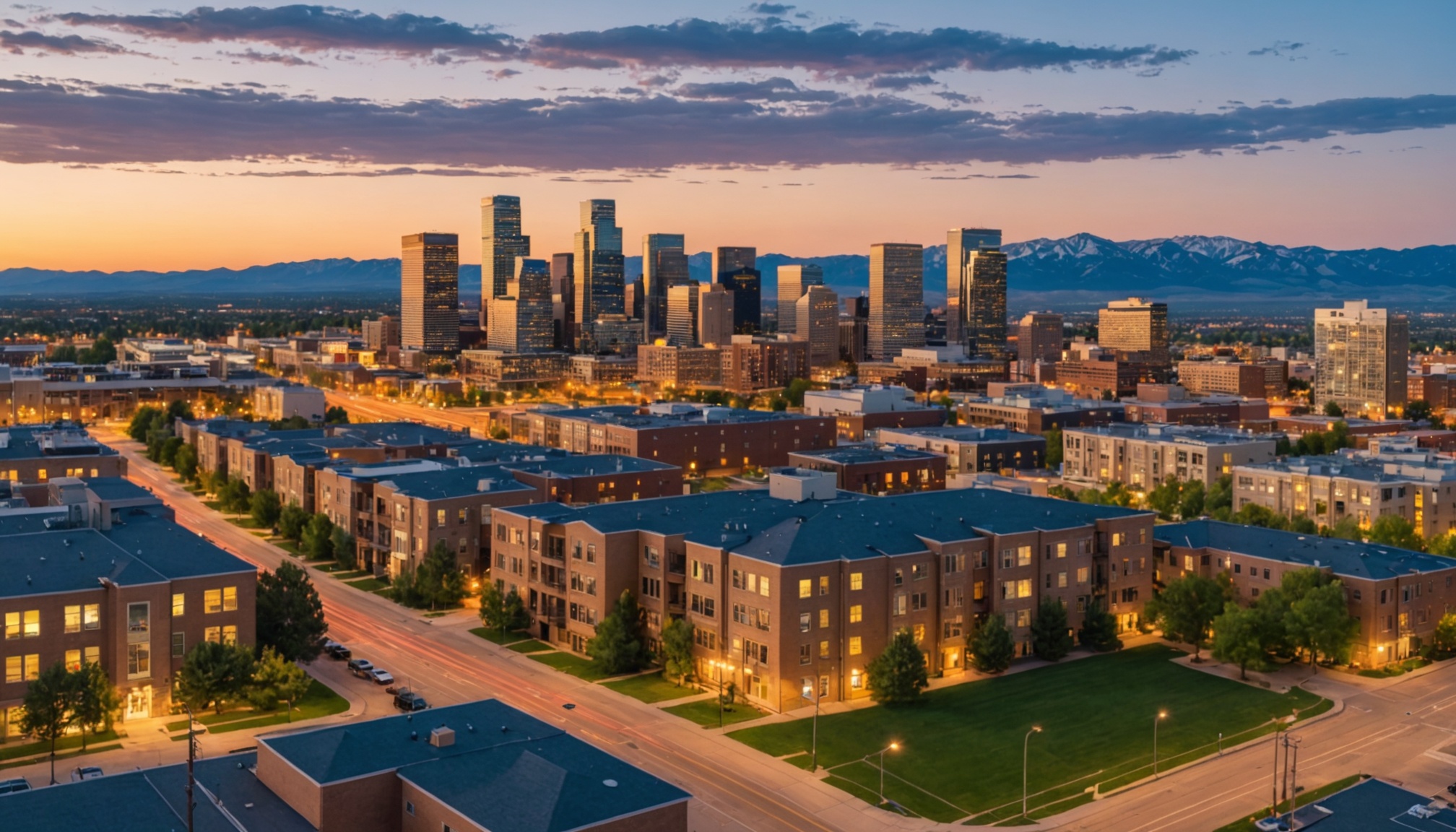
Denver's multifamily market has undergone a significant recalibration over the past 24 months. After a period of exceptional rent growth between 2021 and 2023 — when effective rents in many Front Range submarkets increased 18% to 24% cumulatively — the market absorbed a substantial new supply wave in 2024 and early 2025 that reset operating assumptions for most mid-size operators in the region.
This piece summarizes observed NOI benchmarks across Denver metro multifamily for the period through mid-2025, based on operational data patterns visible in Rentnoi's integration layer. These figures reflect mid-size operator performance (primarily 150 to 600-unit communities), not institutional portfolio aggregates.
Effective Rent and Occupancy by Submarket
Effective rent — the actual rent collected after concessions, as opposed to face rent on the lease — diverged meaningfully from face rent in the Denver market through the first half of 2025. Operators who had reduced concession spend during the 2022-2023 peak were reintroducing one to two week incentives on new leases in submarkets with elevated new supply, particularly in the suburban growth corridors along the E-470 corridor and the Aurora/Centennial area.
Observed effective rent ranges by submarket class through Q2 2025:
- Denver urban core (LoDo, RiNo, Cap Hill, Highlands): $1,950–$2,650/month effective for 1BR; occupancy 91%–94%
- Inner suburbs (Lakewood, Wheat Ridge, Englewood, Arvada): $1,600–$2,100/month effective for 1BR; occupancy 90%–93%
- Aurora/Southeast Denver (including E-470 growth areas): $1,450–$1,900/month effective for 1BR; occupancy 87%–91%, with pockets at 84% in newer lease-up communities
- North Denver (Westminster, Thornton, Broomfield): $1,550–$2,050/month effective for 1BR; occupancy 89%–93%
These figures mask significant within-submarket variance by asset class. Class A new construction in the Aurora corridor was running occupancy in the 84–88% range through Q1 2025 as the submarket digested new supply. Class B value-add communities in established locations (Lakewood, Englewood) with completed renovations were holding occupancy more firmly at 91–93%, with renewal rates above 60%.
NOI Margin Benchmarks
NOI margin — net operating income as a percentage of effective gross income — varied substantially by asset class and submarket through 2025. The broad averages mask significant property-level variance, but as a reference framework:
- Class A stabilized (urban): 48%–54% NOI margin, with higher ranges achievable where concession spend has been controlled
- Class B stabilized (suburban): 50%–57% NOI margin; these communities typically have lower maintenance cost profiles and longer-tenured resident bases with strong renewal rates
- Class B in active value-add: 38%–46% NOI margin during renovation phases, with margin improving as renovated units reach market rent
- Class C workforce housing: 44%–52% NOI margin; collections-intensive but with low vacancy loss when management is active
The compression from peak-2023 NOI margins to mid-2025 levels was most pronounced in Class A suburban communities, where concession spend increased, new supply created pricing pressure, and operating expense inflation (insurance, property taxes, and maintenance labor in particular) continued to build.
Operating Expense Drivers in 2025
Three expense categories saw above-average increases in the Denver metro market through early 2025:
Property Insurance
Insurance premiums for multifamily properties in Colorado continued to increase through 2025, reflecting reinsurance market pressure and elevated hail and weather-related claims across the Front Range. Mid-size operators renewing multi-property policies reported increases of 12% to 22% over 2024 levels, with some communities in high-hail-exposure areas seeing larger jumps. This has become a material line item for NOI planning and should be modeled with explicit annual increases rather than the 3% inflation assumption many operators carried into the 2020s.
Maintenance Labor and Materials
Maintenance tech wage rates in Denver's metro area increased 8% to 14% over 2024 levels, reflecting continued tightness in the skilled trades labor market. For operators using in-house maintenance staff, this is a fixed cost increase that flows directly to the bottom line. For operators relying on vendors, vendor rate increases have been in the 6% to 10% range for recurring contracts.
Property Taxes
Colorado's property tax assessment cycle produced meaningful increases for many multifamily owners in 2024-2025 as properties assessed during the 2022-2023 valuation peak saw higher tax bills. The Taxpayer's Bill of Rights (TABOR) and legislative actions have partially moderated increases for some owners, but the net effect for most mid-size operators was a 5% to 12% increase in property tax expense compared to prior-year levels.
Vacancy Loss and Turn Cost Benchmarks
Vacancy loss as a percentage of gross potential revenue averaged 5.8% to 8.2% across the Denver metro mid-size operator segment through H1 2025, up from 3.5% to 5.5% during the 2022-2023 peak occupancy period. The increase reflects both higher physical vacancy in supply-pressured submarkets and longer average turn times as make-ready and leasing timelines stretched in a more competitive environment.
Average turn cost — the cost to prepare a vacated unit for re-leasing — ranged from $1,850 to $3,400 depending on unit condition, floor plan size, and the scope of renovations performed during turn. Basic turns (cleaning, paint, carpet shampoo) averaged $1,850 to $2,200. Turns that included appliance replacement, flooring upgrades, or fixture updates ranged from $2,600 to $3,400 and higher for full renovation scopes.
Renewal Rate and Concession Trends
Renewal rates across the Denver metro softened slightly in 2025 compared to 2023 highs but remained relatively stable in well-managed communities. Portfolios with active renewal outreach starting 75 to 90 days before expiration maintained renewal rates in the 57% to 65% range. Communities with reactive or late renewal processes saw rates fall to 48% to 54%.
Concession spend on new leases increased in most submarkets. One-week free concessions became common in the Aurora/E-470 corridor and in some higher-supply urban submarkets. Operators tracking concession spend as a percentage of effective rent were seeing it average 2.1% to 3.8% in affected submarkets, up from near-zero in 2022.
For operators looking to benchmark their own portfolio against these Denver market reference points, Rentnoi can overlay your operational data against submarket comps within the platform. Request a demo to see how your properties compare.