Rentnoi connects to your Yardi, AppFolio, or Entrata account and delivers a daily NOI variance breakdown — vacancy, concessions, delinquency, and maintenance costs — so your team sees the gap while there’s still time to close it.
Mid-size operators lose 4–8% of achievable NOI annually to preventable vacancy drag, concession overuse, delinquency gaps, and maintenance overruns.
A 500-unit portfolio at $1,200 average rent represents $720K–$1.44M in recoverable NOI per year when variance goes unaddressed.
Property managers at mid-size operators spend 6–10 hours each week manually building NOI variance reports from Yardi or AppFolio exports.
Rentnoi models vacancy exposure 90 days out by community, giving leasing teams time to act on at-risk renewals before units turn vacant.
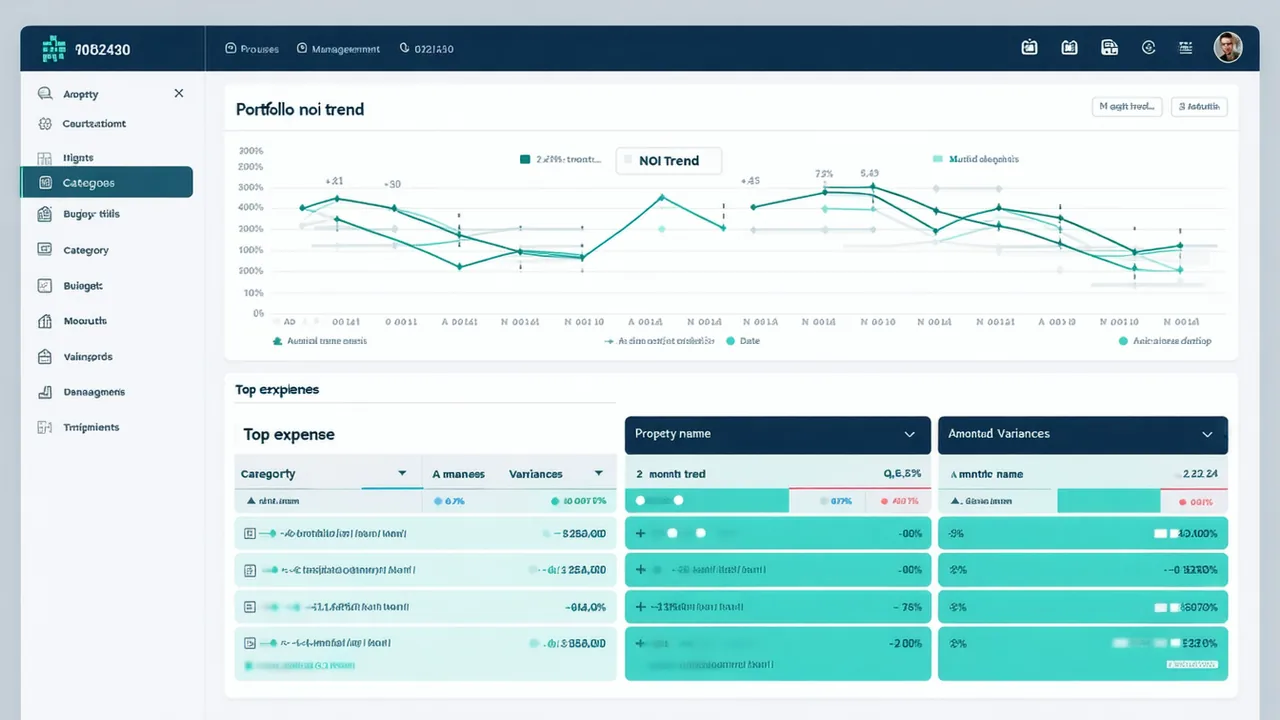
Each morning, Rentnoi pulls the prior day’s ledger data from your property-management system and calculates each community’s NOI position versus budget. The variance engine allocates the gap across four causal buckets: vacancy-driven loss, concession drag, delinquency exposure, and maintenance-cost overage — displayed as a waterfall chart on the community dashboard.
Property managers and regional managers see at a glance which driver is largest on any given day and can prioritize accordingly. No more waiting for month-end to find out where the money went.
Rentnoi models 90-day vacancy risk by pulling each community’s lease-expiration schedule from the PMS and layering in historical renewal rates by unit type, floor plan, and lease-term length. Units with expiring leases that match historical non-renewal profiles are scored as higher renewal risk and flagged for outreach priority.
The model also incorporates a market-absorption signal based on current days-on-market for comparable units in the submarket, so the risk score adjusts automatically when the market softens and replacement periods extend.
The delinquency tracker pulls receivables aging from the PMS daily and displays each community’s outstanding balances by unit, aging bucket (1–5 days, 6–15 days, 16–30 days, 30+ days), and escalation status — notice sent, payment plan, eviction filing, or court date.
For balances in the 16–30 day bucket without a logged payment-plan arrangement, the tracker generates a suggested collection-action prompt. A month-end projection model then estimates the collection shortfall so asset managers can update investor estimates before the books close.
Rentnoi compares each community’s maintenance expenditures by cost category — HVAC, plumbing, appliance, exterior, make-ready — against the annual budget apportioned by month. Categories running more than 15% over budget for two consecutive months generate an anomaly alert in the property manager’s dashboard.
A second layer identifies units with three or more work orders of the same category within a rolling 90-day window, surfacing them as candidates for capital-replacement assessment rather than continued reactive repair spend.
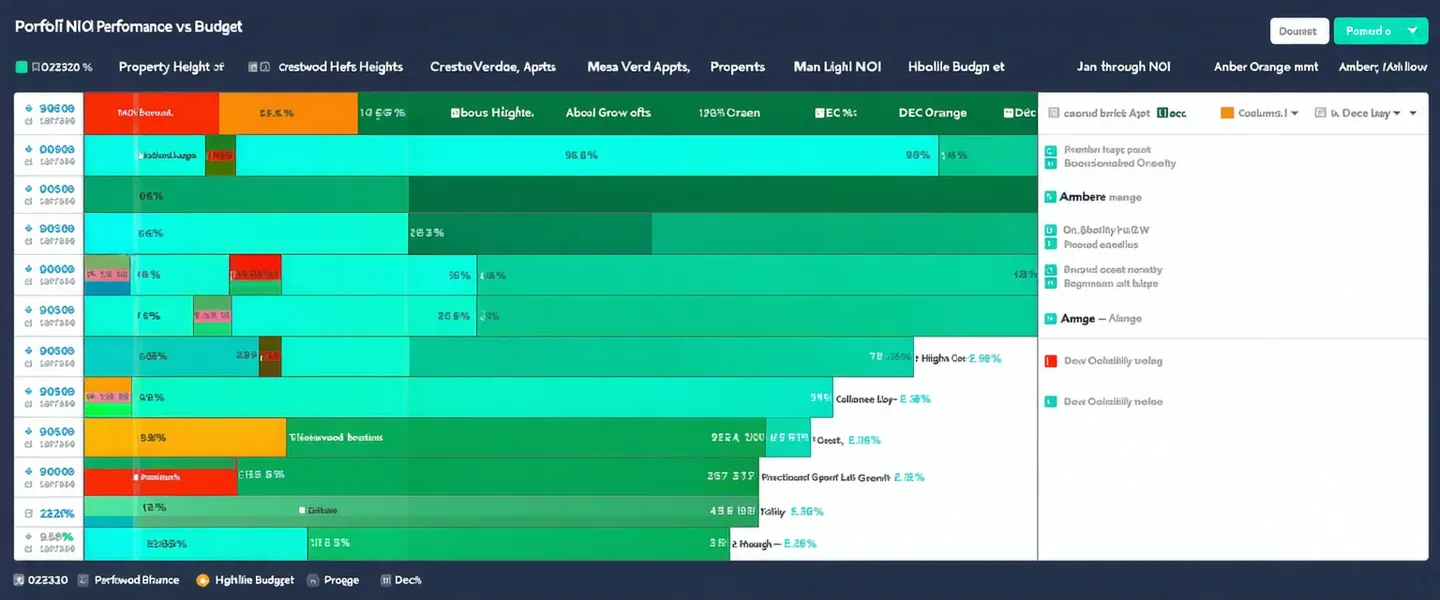
The portfolio dashboard aggregates all connected communities into a single view ranked by current NOI variance percentage. Communities beating budget appear green; those with more than a 3% shortfall appear amber; communities with more than an 8% shortfall are flagged red. The roll-up refreshes nightly and is the default view for regional managers each morning.
For each underperforming community, the top three NOI drag contributors from the decomposition engine are surfaced inline — so asset managers can prioritize site visits and intervention without drilling into individual community dashboards.
Asset managers distributing performance updates to limited partners or property owners can generate a branded PDF report from the Rentnoi portfolio dashboard with a single export action. The report includes the portfolio NOI roll-up, occupancy and delinquency summary, lease-expiration risk forecast for the next 30 days, and a natural-language variance commentary auto-drafted from the decomposition engine’s output.
The commentary uses measured language consistent with investor-reporting norms — actual numbers, causal attribution, no hedging — and can be lightly edited before export. The output uses your logo and contact block uploaded during onboarding.
Rentnoi plugs into your existing Yardi, AppFolio, or Entrata workflow. No data migration, no retraining your team on a new platform — just daily visibility into the numbers that drive your NOI.
Rentnoi connects to Yardi Voyager, AppFolio, or Entrata via API. Onboarding involves a read-only API credential setup — your property management workflow stays exactly as it is.
Each night, Rentnoi pulls gross potential rent, actual collections, concessions, vacancy days, work-order costs, delinquency aging, and lease-expiration schedules across every community in the portfolio.
The variance engine compares trailing-30-day metrics against budgeted NOI targets and decomposes the gap into four causal buckets: vacancy, concessions, delinquency, and maintenance costs. Benchmarks from comparable communities by unit count, asset class, and submarket give context.
Each morning, property managers and regional directors open Rentnoi to a fresh NOI dashboard, delinquency tracker, and lease-expiration risk report. Asset managers get a weekly digest exportable as a PDF for owner and investor reporting.
“Before Rentnoi, I was finding out about NOI variance problems six weeks after they started. Now my team flags a concession issue within 48 hours. That window matters more than people realize when you’re trying to hit budget.”
“The delinquency tracker alone cut our month-end reconciliation time in half. We used to spend three days pulling aging reports from AppFolio. Now the escalation queue is just there every morning, sorted by urgency.”
“Our LP reporting used to take a full day to assemble. With the Rentnoi export, I review the auto-drafted commentary, make two edits, and the PDF is ready. The numbers are accurate and the format is clean enough that investors notice.”
Request a demo and we’ll connect to your PMS data in a sandbox environment to show you the variance decomposition on your own portfolio numbers — no commitment required.